Showing posts with label The People in the Trees. Show all posts

Sunday, November 30, 2014

Archive, Ephemerality, and Texts from Last Night

Screen Shot 2014-11-30 at 6.46.09 PM.png


“If we consider performance as of disappearance, of an ephemerality read as vanishment and loss, are we perhaps limiting ourselves to an understanding of performance predetermined by our cultural habituation to the logic of the archive? [...] in privileging an understanding of performance as a refusal to remain, do we ignore other ways of knowing, other modes of remembering, that might be situated precisely in the ways in which performance remains, but remains differently?” (Schneider 98)

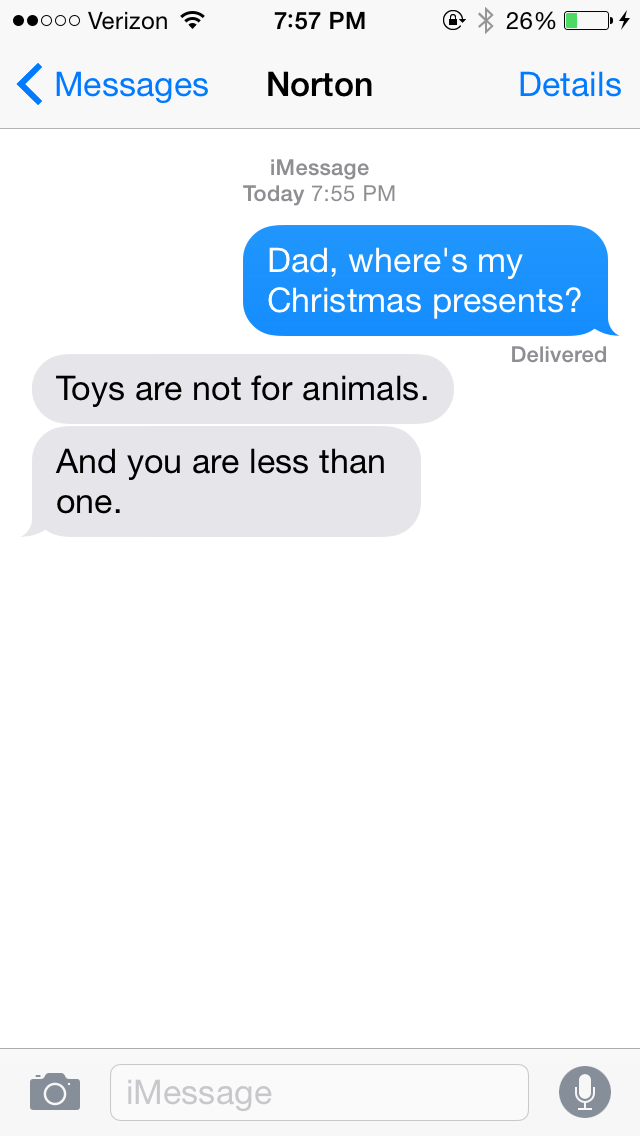
In thinking about the Schneider article, we were struck by the idea that there might be a way to resist vanishing, and what it would mean to read a kind of text that has perspectival ephemerality--i.e. that one person views as naturally disappearing, but another saves for an archive of sorts. One of the more current examples is Snapchat, but we decided to dig up some 2009 goodness and give you Texts From Last Night, from Woman on the Edge of Time and The People in the Trees.


From Woman on the Edge of Time


From The People in the Trees


Monday, November 24, 2014

Imperial Dietetics on Ivu'ivu

Hey! This article talked about Pacific Islanders!  That’s really exciting.  Okay, moment over.

It would be very easy to pair up sections of Tompkins's article with The People in the Trees, as she addresses many themes also central to this text:  imperialism, eating, bodies, sex, assimilation, exoticism, and many more.  For instance, one of the perplexing aspects of the experiences of protagonist, Dr. Perina, on the island is the conflict between his relationship with food compared with that of the natives.  Every item of consumption is foreign, if not exotic:  Spam, manama fruit (a fictional breadfruit type-thing that grows on a tree with scales), vuakas (a small monkey the islanders eat as delicacies), and, of course, the opa’ivu’eke (the magical turtle consumed when one reaches age 60 and subsequently achieves immortality). Furthermore, Dr. Perina’s encounters with the Ivu’ivans becomes sexually charged after his discovery of a pederastic initiation ritual.  While the island itself is not colonized, the neocolonial forces of global capitalism deplete the island of its every food source and then the bodies of its natives, and finally, Dr. Perina adopts dozens of the Ivu’ivuan children for what first appears to be for their education and assimilation, but end up victims of his sexual appetite, bringing full-circle Yanagihara’s allegory of imperialism.  

Since there are so many avenues to explore in this pairing, I might use this text as a way to challenge the students to develop the skills that they will need for essay writing, specifically in integrating a secondary source for their end of term research paper.  This assignment is, of course, for the same course (ENL 180, Univ. of California) for which they read my award-winning Norton Anthology last week (yes, future-me definitely won awards for that masterpiece).  In the class, I would then try an exercise in which they use their collective close reading skills to practice writing strong analytical paragraphs for their essays.

Here’s how it might work:  I’ll put a series of quotations from the primary text up on large sticky-note paper around the room, say 6-8 quotations for a 20-ish person class.  Then, after having read the Tompkins article, they can pair a quote from the secondary source that they feel can either support, complicate, expand, etc, the primary source quotation, and then with their classmates who also like that particular quote, work on crafting an analytical paragraph  on the large sticky-note using close readings and interpretation.  After the groups have written their paragraphs, we all walk around looking at the sticky-notes in a "gallery walk," marveling at their wonderful work.  For example, they might see this quote:

“She took the slippery bits of Spam from our palms, sometimes with her mouth (her puckering lips, wet and vaguely vaginal, kissed against me) and sometimes with the flat of her hand; she seemed not to use her fingers--and waited until she fell asleep flat on her back, all of us watching her by Tallent’s flashlight” (99).

And pair it with this one:

“In Graham’s story from the 1830s food and sex emerge as central themes in a premonitory fantasy  of imperial expansion.  Here commodity consumption and the desire for land serve as a catalytic desires for interactions across national, regional, and ethnic differences [...] Absorbing these alien others and “Americanizing them” is  a constant preoccupation in a nation that is both militarily aggressive and open to successive waves of immigration.”

And maybe they could talk about imperialism, or food, or the sexualization of the “foreign” body, or consumption of that body, or maybe her mouth...maybe they could talk about how her mouth is a vagina.  Maybe.

Monday, November 17, 2014

What was Pacific Literature?

An Excerpt from the Preface of The Norton Anthology of Pacific Literature,
Rebecca Hogue, PhD, Editor (New York: W.W. Norton, 2025)

To be read in conjunction with The People in the Trees by Hanya Yanagihara for ENL 180, University of California

“While my substitution of the formulation “what was x” may seem perverse, the recent publication of this highly anticipated volume of canonical Pacific literature brings to bear many questions of spatiotemporal scope as well as sequence.  What “attachments,” borrowing from Ilan Stavans’s Norton Anthology of Latino Literature, does Pacific literature have to place, language, and identity?  What has, what does, and what will constitute Pacific literature?  In this groundbreaking collection we examine subaltern literatures of a wide and diverse national, linguistic, and geographic range.  Although anthologies of Pacific writings have been in publication since the 1940s, early anthologies only contained anglophone literatures by European and Euro-American settler colonists, missionaries, and other travel writers such as Herman Melville, Mark Twain, Robert Louis Stevenson, and Jack London.  Inspired by the increase in publication of works of other historically underrepresented minorities and in the post-Civil Rights era, the 1970s delivered an awareness of indigenous histories from the Americas into the Pacific.  The publication of oral histories, myths and legends, and other cultural artifacts such as chants and traditional dances moved from the margins to the mainstream throughout the Pacific.  By the 1980s and 90s, multiculturalist anthologies and the formation of the “local” Asian diasporic community began to infiltrate, and arguably, replace indigenous representations of island cultures.  Upon recognition of this imbalanced approach to representing island cultures, literary critics and historians began toward the turn of the 21st Century to reassessing not only the importance of the subaltern voices of the Pacific, but what spatiotemporal scope must be applied to the region.  Is it, as Arif Dirlik proposed, a Pacific Rim, or perhaps, as the United States Department of Defense has posited, a Transpacific Region?  Or could it be best classified as Tongan scholar Epeli Hau’ofa suggests, Oceania, which he characterizes as a pathway to “each other and everything else”?  While many anthologies organize their sections around modern conceptions of the nation-state, as well as pre- and post-Western contact Pacific Islands, this collection orients geographically around and through the Pacific Ocean and includes literatures in English, Hawaiian Creole English (HCE) and other pidgin dialects, Indigenous literatures in translation from such cultures including but not limited to Hawai’i, Samoa, New Zealand/ Aotearoa, Easter Island/ Rapa Nui, Guam/ Guahan, Yap, Chuuk, Fiji, Australia, Taiwan, and Alaska.”
[...]
“Hanya Yanagihara’s The People in the Trees (2013), anthologized here, presents an anachronistic view of Micronesia.  Touted for its style in its initial reception, and presented as “literary” unlike other contemporary representations of the Pacific, People nevertheless perpetuated Orientalist depictions of Micronesians while aiming to critique colonialism in the region.  Despite the controversial portrayal of native peoples, Yanagihara’s work remains one of the most widely read novels on the Pacific and thus a seminal example of the legacy of colonialism and challenges of subaltern subjectivity for the region.”